The RAM Crisis Forces Optimization: LEGO Batman Halves Memory Requirements Amidst AI-Driven Price Surge
The RAM Crisis Forces Optimization: LEGO Batman Halves Memory Requirements Amidst AI-Driven Price Surge
The Perfect Storm: High Requirements, Poor Optimization, and the Global RAM Crisis
The PC gaming landscape is currently navigating turbulent waters, characterized by a challenging combination of factors. Gamers are grappling with the fear of incredibly steep technical requirements coinciding with a steady stream of poorly optimized titles hitting the market. This volatile situation has been dramatically exacerbated by the ongoing global crisis affecting RAM (Random Access Memory), the pricing of which has skyrocketed due to its massive consumption by major Artificial Intelligence (AI) and data center corporations.
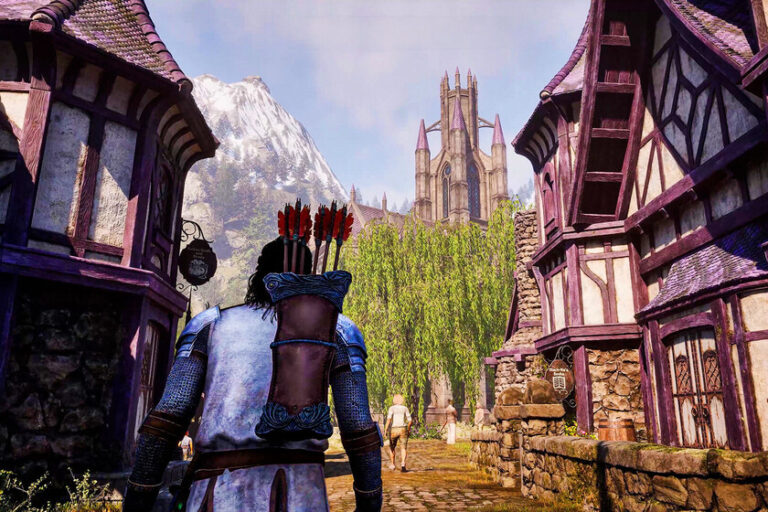
In this high-pressure environment, it appears that some studios are finally recognizing the necessity of optimization. Traveller’s Tales (TT Games) seems to have taken heed, significantly reducing the memory requirements for their upcoming title, LEGO Batman: Legacy of the Dark Knight. This crucial effort has resulted in a staggering 50% reduction in recommended RAM demands for executing the ambitious open-world experience.

The Economic Reality: Why RAM Prices Are Soaring
To understand why this optimization move by TT Games is so significant, we must first analyze the macroeconomic forces driving up hardware costs. The transition to DDR5 memory, coupled with unprecedented demand from non-gaming sectors, has made high-capacity RAM modules prohibitively expensive for the average consumer.
AI and Data Centers: The Primary Drivers of Demand
The exponential growth of generative AI models, large language models (LLMs), and cloud computing infrastructure requires vast quantities of high-speed, high-density memory. Companies like NVIDIA, Google, and Microsoft are purchasing enormous volumes of RAM, often negotiating bulk deals that prioritize enterprise over consumer markets. This enterprise demand creates scarcity and drives up prices globally. For many gamers, jumping from a standard 16GB configuration to 32GB or even 64GB—which is increasingly being pushed as the “recommended” standard—represents a major financial hurdle.
- Scarcity: Enterprise procurement depletes consumer supply lines.
- Inflation: Increased production costs for advanced chips (DDR5, HBM) are passed on.
- Prioritization: Manufacturing shifts focus toward high-margin, enterprise-grade modules.
Initial Outcry: The Shocking 32GB Requirement
When TT Games first unveiled the specifications for LEGO Batman: Legacy of the Dark Knight back in January, the community reaction was immediate and negative. While the minimum requirement of an RTX 2070 was already steep, the real shock came from the memory demands. Players were initially required to have a whopping 32GB of RAM just to run the open-world game at ‘maximum quality’ or the recommended settings. While the minimum spec stood at 16GB, demanding double that for the optimal experience instantly raised red flags across enthusiast forums and hardware analysis sites.
For context, 16GB has long been considered the standard for modern high-end gaming. Asking for 32GB—especially for a title based on a family-friendly IP like LEGO—suggested a severe lack of optimization or an engine incompatibility issue.
TT Games Responds: Optimization Yields Results
Following a month of community silence and intense internal scrutiny, the British studio, a subsidiary of Warner Bros., released a critical update on Steam. The studio explained that several weeks of continuous technical testing and optimization on the PC build had been implemented, specifically targeting memory usage in the expansive open world.
The outcome was a significant victory for consumers: the new requirement for running the game smoothly is now standardized at 16GB of RAM for both the minimum and recommended specifications. This change effectively halves the previous high-end memory requirement.
Comparing Requirements: Initial vs. Revised
The revised specifications demonstrate a commitment from the studio to ensure broader accessibility, acknowledging the financial constraints facing their player base. Here is a comparison of the key memory specifications for LEGO Batman: Legacy of the Dark Knight:
| Specification Category | Initial Requirement (January) | Revised Requirement (Post-Optimization) | Change (%) |
|---|---|---|---|
| Minimum RAM | 16 GB | 16 GB | 0% |
| Recommended RAM (Open World) | 32 GB | 16 GB | -50% |
| Historical Context (LEGO Star Wars: TSS) | 8 GB (approx.) | N/A | N/A |
The Engine Debate: Unreal Engine 5 vs. NTT
A central point of controversy among players regarding the initial high requirements was TT Games’ decision to move away from their proprietary engine, NTT (Traveller’s Tales), and instead utilize Unreal Engine 5 (UE5) for this new Batman title. While UE5 offers unparalleled visual fidelity and advanced tools like Nanite and Lumen, it often comes with a higher baseline requirement for system resources, particularly memory bandwidth and VRAM.
Potential Causes for Initial Resource Bloat
Many players speculated that the adoption of UE5 was the root cause of the ‘inflated’ technical specifications. While UE5 is powerful, integrating a new engine, especially one focused on high-detail asset streaming and global illumination, requires meticulous optimization, which often only happens late in the development cycle.
- Nanite Geometry Streaming: Handles billions of polygons but requires efficient memory management to stream data effectively.
- Lumen Global Illumination: Real-time lighting simulations place heavy demands on both VRAM and system RAM.
- New Development Pipeline: Shifting away from a decades-old proprietary engine (NTT) means new workflows, debugging processes, and optimization learning curves.
The fact that TT Games successfully reduced the RAM requirement suggests they have been actively tuning UE5’s memory allocation, likely by adjusting streaming budgets, texture resolutions for distant objects, and optimizing the interaction between Nanite and the open-world loading systems.

The Development Timeline: Specs Are Not Final
It is important to note that the studio itself cautioned that even these revised specifications are not definitive. LEGO Batman: Legacy of the Dark Knight has not yet reached its ‘Gold Phase’—the point at which development is concluded and the game is sent for manufacturing/distribution. The remaining months leading up to its expected release in May will be crucial for continued optimization, particularly within the vast and complex open-world environment.
“We are continuing to refine our memory usage and performance across the board,” the studio stated, implying that further tweaks, potentially affecting CPU or GPU requirements, could still occur before launch. This transparency is a welcome change in an industry often criticized for last-minute, inflated requirement dumps.
What Does Optimization Entail?
Optimization is not merely lowering graphics settings; it involves deep technical work to ensure resource allocation is efficient. For RAM usage, this often means:
- Heap Management: Ensuring memory blocks are freed immediately after use, preventing memory leaks.
- Asset Streaming Budgets: Defining how much high-resolution data is held in RAM at any given time, especially when traversing the open world rapidly.
- LOD (Level of Detail) Tuning: Aggressively dropping the detail of distant geometry to reduce the memory footprint of loaded environments.
Industry Implications: A Shift Towards Necessity?
While the reduction of specifications for one LEGO game might seem like an isolated incident, it carries broader implications for the industry. The economic pressures exerted by the RAM crisis and the increasingly hostile reaction of the consumer base to poorly optimized, resource-heavy releases are creating a tipping point.
The days when developers could simply rely on ever-increasing hardware capabilities to brute-force optimization problems may be ending. When 32GB of RAM is both highly expensive and often unnecessary for optimal performance, the spotlight falls squarely on the development studio.
| Old Paradigm (2018-2022) | New Imperative (2023-Present) |
|---|---|
| Rely heavily on high-end hardware to mask inefficiencies. | Focus on efficiency and memory management from day one. |
| Minimum requirements often represent barely playable states. | Minimum requirements must offer a smooth, acceptable experience. |
| Optimization occurs primarily post-launch via patches. | Critical optimization must be completed before the Gold Phase. |
| High specs justified by use of cutting-edge, resource-heavy features (e.g., maximum ray tracing). | High specs must be demonstrably necessary for performance gains, not just bloat. |
The case of LEGO Batman: Legacy of the Dark Knight could serve as a leading example, proving that significant performance gains and resource reductions are achievable through dedicated technical focus, even when using demanding modern tools like Unreal Engine 5. It demonstrates that the current hardware crisis is, perhaps inadvertently, forcing a much-needed return to the fundamental principles of lean and efficient code development.
Conclusion: A Small Victory for Consumers
The economic squeeze on gamers due to abusive hardware pricing, particularly for RAM, has led to a moment of necessary reckoning for game studios. TT Games’ decision to aggressively optimize their open-world title and reduce the recommended RAM requirements by 50% is a small but significant victory for the consumer.
Whether this marks the beginning of a broader trend of ‘over-optimization’ becoming the new standard in PC game development remains to be seen. However, given the ongoing pressures from AI demand driving memory prices higher, it is an increasingly unavoidable conclusion. For now, Batman’s latest adventure is signaling that studios are capable of adjusting their sights—and their system requirements—to meet the economic reality of their audience, ensuring that access to high-quality gaming doesn’t require a bank loan for computer memory.