Todd Howard’s Evolving Stance: How Oblivion Remastered Softened Bethesda’s Boss on Re-releases
Todd Howard’s Evolving Stance: How Oblivion Remastered Softened Bethesda’s Boss on Re-releases
For years, Todd Howard, the revered director and executive producer at Bethesda Game Studios, held a firm and oft-repeated position regarding game re-releases: he was staunchly ‘anti-remake.’ His philosophy championed the preservation of games ‘as they were,’ believing that a title’s age and original design were integral to its personality and historical context. This perspective cast a long shadow over the hopes of many fans eager to see classic Bethesda RPGs like Morrowind or even Fallout 3 get a modern facelift. However, a seismic shift has occurred, one triggered by an experimental release that far exceeded all expectations: The Elder Scrolls: Oblivion Remastered.
The Unprecedented Success of Oblivion Remastered
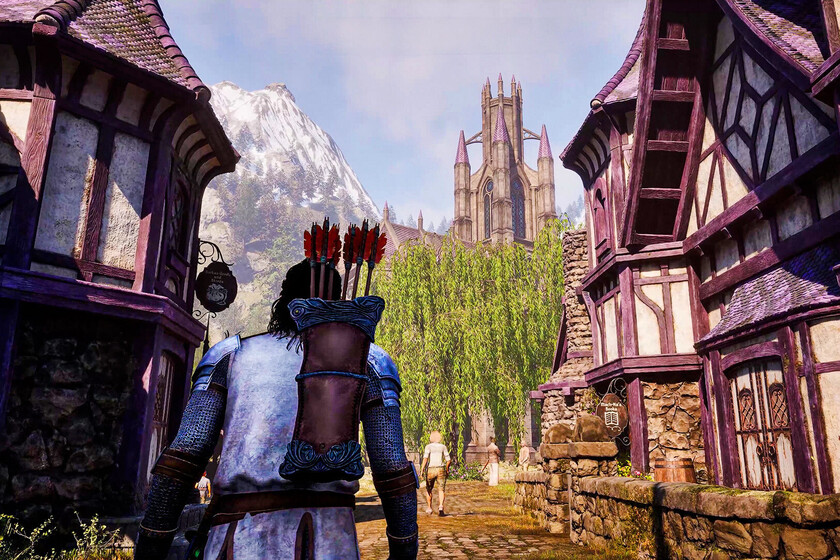
Launched in April 2025, The Elder Scrolls: Oblivion Remastered wasn’t just another re-release; it was a phenomenon. Within a mere three days of its launch, the beloved fantasy RPG captivated over four million players and sold more than one million copies on PlayStation 5 alone. This staggering success wasn’t merely a testament to Oblivion’s enduring appeal but a clear signal to Bethesda and, more specifically, to Todd Howard himself, that there was a hungry market for thoughtfully updated versions of their cherished classics.
The numbers spoke volumes: the ‘experiment’ had paid off handsomely, drastically altering Bethesda’s future plans and, crucially, Howard’s long-held beliefs. The enthusiastic reception from both critics and a passionate player base proved that a respectful modernization could not only honor the original but also introduce it to a new generation of gamers, all while delighting long-time fans.

Todd Howard’s Original Philosophy: A Deep Respect for Originality
Prior to Oblivion Remastered’s triumph, Todd Howard’s stance was unequivocal. In a 2018 interview, he expressed a distinct preference against extensive remasters or remakes of games like Morrowind or Fallout 1. His reasoning stemmed from a deep-seated belief that games, much like other forms of art, should be preserved in their original form. ‘I’m generally an anti-remake person,’ he stated, explaining his respect for other industry remakes but emphasizing, ‘I really do think the age of a game is part of what it is and its personality and what it represented when it came out.’
This philosophy wasn’t about resisting progress; it was about honoring artistic intent and the unique experience a game offered at its time of release. For Howard, tinkering too much with the core fabric of a game risked eroding its very essence, changing its ‘personality’ into something it wasn’t meant to be. This perspective undoubtedly informed Bethesda’s past approach to re-releases, which often leaned more towards simple ports or minor graphical bumps, exemplified by the various iterations of Skyrim over the years, rather than comprehensive overhauls.
The Nuance of ‘Remaster’ vs. ‘Remake’ in Howard’s Eyes
The success of Oblivion Remastered, however, compelled Howard to articulate a critical distinction between what he considers a ‘remaster’ and a ‘remake.’ In a recent interview on the Kinda Funny podcast, Howard conceded, ‘I’ve softened on the whole remaster thing. Given the success of Oblivion Remastered, we’re thinking about others, but we’ll see what happens.’
But what exactly did Oblivion Remastered do to earn this ‘softening’? The key lies in Howard’s definition. The objective with Oblivion Remastered was to create ‘an absolutely better version you can imagine,’ but crucially, ‘while keeping the original game running underneath’ (via PC Gamer). This meant that if you delved into the installation files, the original 2006 Oblivion code was still present. It wasn’t a ground-up rebuild; it was an enhancement.
This approach aligns perfectly with Howard’s desire to ‘preserve the personality of a game’ while improving specific aspects, primarily graphics. In the case of Oblivion Remastered, they went a step further, addressing a long-standing criticism by significantly improving the notorious level-scaling system, a quality-of-life upgrade that enhanced the core gameplay experience without altering its fundamental identity.
To better understand Howard’s specific distinction, let’s look at a comparison:
| Feature | Todd Howard’s ‘Remaster’ (e.g., Oblivion Remastered) | Todd Howard’s ‘Remake’ (Generally Anti-Stance) |
|---|---|---|
| Core Codebase | Original game’s code runs underneath, preserved. | Built from scratch, completely new engine/code. |
| Graphical Improvements | Significant enhancements (textures, lighting, models). | Complete visual overhaul, often with new art direction. |
| Gameplay Changes | Minor quality-of-life adjustments, bug fixes, system tweaks (e.g., Oblivion’s level scaling). | Substantial re-imagining of mechanics, level design, story elements. |
| Original Identity | Maintains the ‘personality’ and feel of the original. | Transforms the experience, potentially losing original essence. |
| Purpose | Enhance and modernize for new platforms while honoring legacy. | Re-envision and rebuild for a completely new experience. |
The Horizon of Possibilities: Fallout 3 and New Vegas?
This nuanced shift in perspective has ignited fervent speculation among the fan community, especially concerning other beloved Bethesda titles. Reports from reputable sources like Windows Central have suggested that Fallout 3 could be next in line to receive ‘the Oblivion treatment.’ When directly questioned about these rumors, Todd Howard notably did not deny them, adding fuel to the fire. A ‘Fallout 3: Oblivion treatment’ would likely entail a similar approach: graphical enhancements, performance optimizations, and perhaps subtle quality-of-life improvements that address long-standing player feedback, all while preserving the grim, post-apocalyptic charm of the Capital Wasteland.
Even more exciting for many is the possibility of Fallout: New Vegas receiving a similar update. While Windows Central also reported on this potential, caution is warranted; such projects require significant development time, and fans will likely have to wait considerably longer for any official confirmation. Given New Vegas’s legendary status among RPG enthusiasts for its branching narratives and impactful player choices, a respectful remaster could elevate an already exceptional title to new heights on modern hardware.
Why Not Morrowind? The Case for Preserving the Unique
While the prospect of updated Fallout titles is tantalizing, the question of Morrowind often arises. Interestingly, a veteran developer from the Skyrim team reportedly believes that a full remaster of Morrowind might not be a good idea. This sentiment echoes Todd Howard’s earlier, more rigid stance and highlights the unique challenges of modernizing certain classics.
Morrowind’s appeal lies partly in its unapologetic alienness, its dense and often obtuse mechanics, and its distinct, almost dreamlike aesthetic. Many feel that attempting to ‘fix’ these elements with modern conventions could strip away what makes Morrowind so special and enduringly beloved by its niche audience. Its aged graphics and peculiar movement, for instance, are seen by some as part of its charm and challenge, not flaws to be eradicated. A remaster, even by Howard’s definition, might inadvertently dilute the very ‘personality’ he aims to preserve.
The Broader Industry Context: Why Remasters Thrive
Todd Howard’s shift in thinking isn’t happening in a vacuum; the video game industry has seen an explosion of successful remasters and remakes in recent years. This trend is fueled by several factors:
- Nostalgia and Accessibility: Players cherish memories of past games and crave the chance to relive them with modern visuals and performance. Remasters also make classic titles accessible to new players who might be put off by outdated graphics or clunky controls.
- New Hardware Capabilities: The power of current-generation consoles (PS5, Xbox Series X/S) and high-end PCs allows for breathtaking graphical fidelity and smoother performance, breathing new life into older games without requiring a complete rebuild.
- Filling Development Gaps: Remasters can serve as excellent interim releases between major new titles, keeping studios active, generating revenue, and maintaining player engagement during longer development cycles for ambitious projects like The Elder Scrolls VI or Fallout 5.
- Proven IPs, Reduced Risk: Investing in a remaster of a beloved, critically acclaimed title carries less risk than developing an entirely new IP from scratch. The fanbase is already established, and the core gameplay is proven.
Bethesda, with its rich catalog of iconic RPGs, is perfectly positioned to leverage this trend. While new entries like Starfield push boundaries, carefully chosen remasters can celebrate their legacy and expand their audience simultaneously. The success of Oblivion Remastered provides a strong template for future endeavors, confirming that a respectful, enhancement-focused approach can indeed yield significant rewards.
Conclusion: A New Era for Bethesda’s Classics?
Todd Howard’s change of heart marks a significant moment for Bethesda and its legions of fans. What was once an unyielding ‘anti-remake’ stance has evolved into a more nuanced appreciation for specific types of re-releases. The overwhelming success of The Elder Scrolls: Oblivion Remastered proved to be the catalyst, demonstrating that enhancing a beloved classic while meticulously preserving its core identity can resonate deeply with a modern audience.
This shift opens up exciting possibilities for the future. While purists may still debate the merits of altering any aspect of an original work, Howard’s defined approach – prioritizing graphical fidelity, performance, and crucial quality-of-life improvements while keeping the foundational game intact – offers a promising path forward. Fans can now genuinely hope for modern iterations of other iconic titles like Fallout 3 and perhaps even Fallout: New Vegas, knowing that these potential remasters would likely be crafted with a deep respect for their original artistic vision and ‘personality.’ The wait for The Elder Scrolls VI and Fallout 5 might feel a little shorter if we have some beloved, updated classics to revisit along the way.