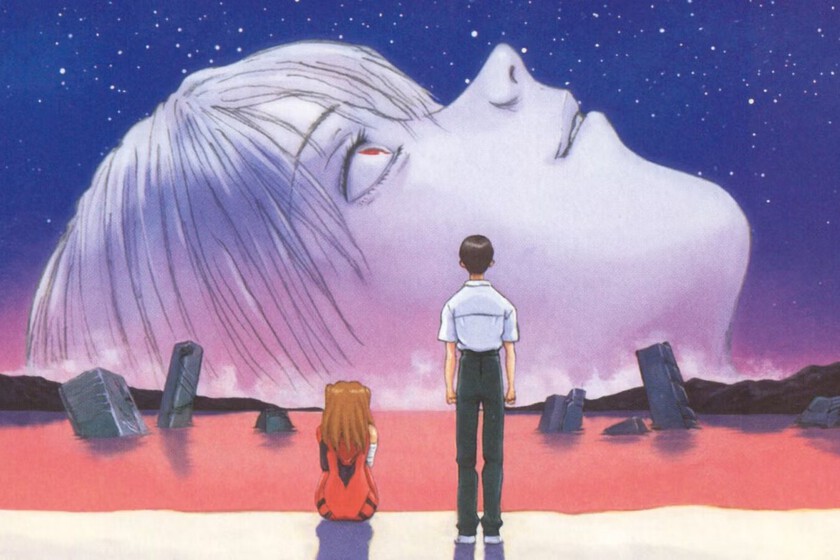
Evangelion’s 30th Anniversary Short: The Controversial ‘Desired Ending’ for Shinji & Asuka
Evangelion’s 30th Anniversary Short: The Controversial ‘Desired Ending’ for Shinji & Asuka
Evangelion’s 30th Anniversary Short: The ‘Desired Ending’ That’s Dividing Fans
The world of Neon Genesis Evangelion has once again sent shockwaves through its dedicated fanbase. For 30 years, Hideaki Anno’s seminal anime franchise has captivated, confused, and challenged audiences, building a legacy defined by profound psychological depth, groundbreaking mecha action, and notoriously ambiguous endings. Now, as part of the EVA Fest celebrations commemorating three decades of impact, a new animated short has emerged, seemingly offering a conclusion many fans have yearned for, yet simultaneously igniting a fresh wave of fervent debate.
Initially announced as a special project for the anniversary, this Asuka-centric short has already been screened for attendees in Japan. In true internet fashion, details and tantalizing images quickly circulated across social media, giving the global fanbase an early, albeit unofficial, look at its contents. What these leaks suggest is nothing short of revolutionary for a segment of the fandom: a potential alternate ending where Shinji Ikari and Asuka Langley Soryu find their long-awaited happiness together, possibly even raising a child.
This revelation stands in stark contrast to the definitive conclusion presented in Evangelion 3.0 + 1.0 Thrice Upon a Time, the final Rebuild of Evangelion film, which saw Shinji embarking on a new path with Mari Illustrious Makinami. The disparity has not only thrilled the ardent supporters of the Shinji x Asuka pairing (often dubbed ‘ShiSuka’) but has also prompted critical discussions about character development, narrative intent, and the very nature of Evangelion’s often-elusive canon. Is this a true alternate reality, a nostalgic fan service, or another layer in Anno’s complex tapestry of storytelling? Let’s dive into the details and the passionate discourse surrounding this unexpected anniversary gift.
Evangelion: A Legacy of Multiverses and Deep Lore
To fully grasp the significance of this new short, one must first understand the complex, often fractured, narrative structure of the Evangelion universe. From its initial television run in 1995, through The End of Evangelion, and into the four-part Rebuild of Evangelion film series, the franchise has consistently played with concepts of parallel timelines, cyclical narratives, and differing interpretations of the same core events. Many fans and theorists posit that Evangelion operates within a multiverse, where each major iteration — the TV series, the manga, and the Rebuild films — represents a distinct, yet interconnected, reality or a repeating temporal loop with subtle variations.
This multiversal framework is crucial because it allows for the existence of multiple ‘endings’ or ‘interpretations’ without necessarily negating previous ones. Hideaki Anno himself has often used the franchise as a vehicle for personal introspection and societal commentary, evolving his themes and character resolutions over time. This adaptability is precisely what makes the new short so intriguing: it could be seen as yet another branch on Evangelion’s ever-expanding narrative tree, offering a different outcome for beloved characters who have traversed countless emotional battlefields.

The Ever-Evolving Narrative of Neon Genesis Evangelion
The journey of Evangelion has been anything but straightforward. The original TV series ended with an abstract, psychological conclusion, leaving many viewers baffled. The End of Evangelion offered a more concrete, albeit equally disturbing, cinematic alternative. The Rebuild films, initially appearing as a retelling, soon veered into an entirely new narrative trajectory, introducing new characters, shifting existing relationships, and culminating in a conclusion that aimed to ‘finish’ Evangelion and allow both its creator and its audience to move forward. Each iteration has re-contextualized events and character arcs, reinforcing the idea that no single narrative is truly definitive.
The Anticipated Asuka-Centric Short: What We Know
The announcement of a new animated project for Evangelion’s 30th anniversary generated immense excitement, especially when it was revealed to be an ‘Asuka-focused’ short. Asuka Langley Soryu, a fan-favorite character known for her fiery personality, profound insecurities, and tragic backstory, has always been a central figure in the franchise’s emotional core. The prospect of her being the focus of a new animation fueled speculation about new insights into her character or perhaps even a narrative resolution specific to her.
The short debuted at EVA Fest, an event designed to celebrate the franchise’s enduring legacy. While a global release date remains unconfirmed, the immediate aftermath of its screening saw a flurry of information disseminating online. Attendees reported that the short was a blend of familiar and new elements, visually nodding to both the original series and the Rebuild films. Critically, it seemed to draw heavily on the multiversal concepts, featuring elements of ‘Rebuild Asuka’ alongside traits and scenarios reminiscent of her original TV series counterpart.
Early Glimpses and Fan Reactions from Japan
Thanks to passionate attendees and the ubiquitous nature of social media, details about the short’s climactic ending quickly surfaced. Images, descriptions, and summaries painted a picture that deviated sharply from the canonical ending of Evangelion 3.0 + 1.0. The core revelation was a scene depicting Shinji and Asuka together, seemingly happy and contented, in a shared domestic setting. What truly sent the fanbase into a frenzy was the apparent presence of a child, strongly implied to be theirs.
This imagery, if confirmed upon wider release, presents an ending that many long-time fans of the Shinji x Asuka pairing had dreamed of but never truly expected to see realized within any official Evangelion media. For a fandom often accustomed to bittersweet, tragic, or highly ambiguous conclusions, this overt portrayal of domestic bliss and romantic fulfillment for two of its most famously troubled characters was nothing short of astonishing. The initial reaction was overwhelmingly celebratory among ‘ShiSuka’ supporters, who immediately hailed it as the ‘definitive ending’ they had always desired.
A Shocking Revelation: Shinji and Asuka’s “Definitive” Ending
The leaks from the 30th-anniversary short suggest a bold reinterpretation of the characters’ fates. Instead of the open-ended departure with Mari seen in Evangelion 3.0 + 1.0, this new narrative thread culminates in Shinji and Asuka not only reconciling their deep-seated emotional complexities but also forging a future together. The purported images show them in a seemingly tranquil existence, far removed from the apocalyptic battles and psychological torment that defined their past. The inclusion of a child further cements this as a traditionally ‘happy’ and conclusive romantic ending, a stark contrast to the often-agonizing nature of their relationship in previous iterations.
The original article notes that their relationship was always complicated, with Asuka admitting a past attraction that faded due to Shinji’s perceived lack of growth. This new short, if interpreted as a resolution, would imply that Shinji has indeed ‘grown’ in a way that allows for this mutual happiness, or perhaps, it presents a timeline where their growth trajectories aligned differently. This narrative choice directly addresses decades of fan speculation and desire for a romantic conclusion between the two characters who, despite their profound dysfunction, shared an undeniable bond forged in trauma and shared experiences.
Direct Comparison: The New Short vs. Evangelion 3.0 + 1.0’s Conclusion
To fully appreciate the impact of this anniversary short, it’s essential to compare its rumored ending with the official conclusion of the Rebuild series. The final film, Evangelion 3.0 + 1.0 Thrice Upon a Time, painstakingly worked towards a resolution where Shinji, having faced his past and embraced self-acceptance, chose to ‘unmake’ the world of Evangelion and create a new, EVA-free reality. In this new world, he is seen boarding a train with Mari, signaling a new, healthier beginning away from the cycles of trauma perpetuated by his relationships with Rei and Asuka.
The new short presents an alternative that directly challenges this outcome, offering a different interpretation of what constitutes a ‘happy’ or ‘resolved’ ending for Shinji and Asuka. Here’s a comparative breakdown:
| Aspect | Evangelion 3.0 + 1.0 (Official Ending) | New 30th Anniversary Short (Leaked Ending) |
|---|---|---|
| Primary Character Pairing | Shinji Ikari and Mari Illustrious Makinami | Shinji Ikari and Asuka Langley Soryu |
| Setting/Outcome | A “Neon Genesis” world, free of EVAs, Shinji and Mari embarking on a new life away from the ‘curse of Evangelion’. | An alternate reality where Shinji and Asuka are happily together, seemingly in a domestic setting, raising a child. |
| Thematic Resolution (Shinji) | Breaking the cycle of trauma, finding a new path, and moving forward with a supportive partner (Mari) who is external to his core traumatic relationships. | Achieving a traditional romantic ‘happy ending’ with a long-standing partner (Asuka), potentially resolving past emotional conflicts and shared trauma through partnership and family. |
| Fan Reception (General) | Divisive, praised for Shinji’s growth and self-acceptance, but criticized by “ShiSuka” fans and those who found Mari’s role underdeveloped. | Hailed as the “definitive” ending by “ShiSuka” fans, fulfilling a long-held desire. Criticized by those who saw Mari’s role as crucial for Shinji’s growth and who believe the pairing re-engages cycles of trauma. |
| Canonical Status | The conclusive, official ending to the Rebuild of Evangelion film series, intended to provide closure. | Likely an alternate timeline, fan service, or a ‘what if’ scenario within the broader Evangelion multiverse, due to its direct contradiction of the Rebuilds’ conclusion. |

The Enduring Appeal of Shinji and Asuka: A Complex Relationship
The relationship between Shinji and Asuka has been one of the most intensely debated and passionately supported dynamics in anime history. From their initial clashes and shared duties as EVA pilots to their moments of vulnerability and profound mutual understanding, their connection is undeniably central to the Evangelion narrative. Fans of the ‘ShiSuka’ pairing often point to their shared trauma, their mirrored struggles with self-worth, and their deep-seated need for connection as reasons for their bond. Despite the constant friction and emotional abuse, there’s an undeniable chemistry and a sense that, perhaps, only they could truly understand each other’s pain.
Why Fans Clung to the Shinji x Asuka Pairing
Their relationship is a microcosm of Evangelion’s themes: the struggle for intimacy, the fear of hurt, and the challenge of healthy communication. Many viewers saw the potential for profound growth in their dynamic, believing that if Shinji and Asuka could overcome their individual neuroses and learn to truly love and support each other, it would represent the ultimate triumph over the series’ pervasive themes of isolation and despair. For these fans, their coupling wasn’t just about romance; it was about two broken individuals finding healing and completion in each other, a poetic resolution to their suffering.
The Great Debate: Desired Ending vs. Character Evolution
While the ‘ShiSuka’ fanbase rejoiced, the new short’s leaked ending quickly sparked a significant counter-narrative, fueling a debate that touches upon the core philosophical questions of Evangelion. Many viewers, particularly those who appreciated the ending of Evangelion 3.0 + 1.0, expressed concern that this new short undermines Shinji’s hard-won character development. The argument posits that Shinji’s journey in the Rebuild films was about breaking free from toxic cycles, learning to choose his own path, and moving towards healthier relationships that didn’t perpetuate his trauma. Mari, in this context, represented that new, unburdened future.
One fan, as quoted in the original input, succinctly put it: “Only Mari offered a final outside of that cycle of abuse or trauma. And they just ruined it.” This perspective views a Shinji-Asuka pairing, especially after the events of The End of Evangelion and their deeply dysfunctional interactions, as a regression. It suggests that choosing Asuka would pull Shinji back into the very patterns of codependency and emotional turmoil he spent the entire Rebuild series trying to escape. The debate centers on whether a ‘happy ending’ for these specific characters necessitates a departure from their deeply ingrained psychological issues, or if it can be found within the very crucible of their shared, turbulent history.
The Argument for Mari’s Role in Shinji’s Journey
Mari Illustrious Makinami, a character introduced in the Rebuild films, played a pivotal role in Shinji’s ultimate liberation. Unlike Rei and Asuka, whose relationships with Shinji were deeply intertwined with his trauma and often reflected his own self-hatred, Mari offered an external, unburdened perspective. She was playful, supportive, and encouraged Shinji to embrace life and move forward, rather than dwelling in past pain or internal conflict. For many, her presence in the final scene of Evangelion 3.0 + 1.0 symbolized Shinji’s healthy detachment from the Evangelion world and his embrace of a genuinely new beginning, free from the psychological baggage of his past relationships.
Hideaki Anno’s History of Subverting Expectations
It’s also crucial to remember Hideaki Anno’s long history of challenging and often subverting fan expectations. From the controversial TV ending to the brutal honesty of The End of Evangelion, Anno has never shied away from making creative choices that prioritize his artistic vision over fan desires. The Rebuild films, in particular, were described by Anno as his way of finally ‘ending’ Evangelion, not just for the audience, but for himself, allowing him to move on to new projects. This makes the emergence of a fan-service-like ending all the more perplexing and open to interpretation. Is Anno offering a nostalgic ‘what if,’ or is this a deeper comment on the nature of multiple realities and desired outcomes?

What Does This Mean for the Evangelion Canon?
The immediate question on every fan’s mind is the canonical status of this new short. Given its direct contradiction of the official Rebuild ending, it’s highly improbable that it’s meant to overwrite Evangelion 3.0 + 1.0 Thrice Upon a Time. Instead, the most logical interpretations fall into a few categories:
- An Alternate Timeline/Multiverse: This aligns perfectly with the established fan theories and internal logic of Evangelion’s various iterations. It simply presents another branch in the infinite possibilities of the Evangelion universe, a ‘what if’ scenario that allows for a different resolution.
- Pure Fan Service/Celebration: For a 30th-anniversary celebration, it’s plausible that Studio Khara and Anno decided to give a segment of the fanbase the ending they always wanted, without necessarily integrating it into the primary canon. It’s a nostalgic nod to a passionate shipping community.
- A Dream/Fantasy Sequence: It could also be a non-literal sequence, perhaps a dream of Asuka’s, a symbolic representation of desired peace, or even a meta-commentary on the nature of storytelling and desired outcomes.
The Nature of Evangelion’s “Endings”
Evangelion has never been a franchise that offers neat, definitive conclusions. Each ‘ending’ has served a different purpose, reflecting changing artistic intentions, societal contexts, and Anno’s own personal journey. This new short only reinforces that tradition, adding another layer to the already dense narrative. Rather than providing a singular truth, it offers another perspective, another possibility, enriching the ongoing discourse about what Evangelion truly means and how its characters ultimately find their place in the world.
Anticipation Builds: When Will the World See It?
Currently, the 30th-anniversary short remains exclusive to attendees of the EVA Fest in Japan. For the vast international fanbase, the wait continues for an official release, whether through streaming platforms, Blu-ray releases, or another special event. The anticipation is palpable, as fans worldwide eagerly await the opportunity to witness this controversial ending for themselves and form their own opinions on its implications.
Once released, it’s guaranteed to reignite discussions, analyses, and debates across every corner of the internet. The discourse around Evangelion is as vibrant and complex as the series itself, and this short is set to add another fascinating chapter to its legacy. Whether seen as a gift, a contradiction, or simply another intriguing layer, it proves that even after three decades, Neon Genesis Evangelion still possesses the power to surprise, provoke, and leave an indelible mark on its audience.
Conclusion: Evangelion Continues to Spark Conversation
The Evangelion 30th-anniversary short is more than just a piece of animation; it’s a catalyst for renewed discussion about one of anime’s most iconic and impactful franchises. By seemingly delivering an ending long desired by a significant portion of its fanbase, it has once again demonstrated Hideaki Anno’s willingness to experiment and challenge perceptions. Regardless of its eventual canonical status, this short ensures that the conversations about Shinji, Asuka, and the profound world of Evangelion will continue to resonate for years to come, proving that some stories, and their many potential endings, truly are timeless.